Florence Travel Guide 2026 — Uffizi, Duomo, Food & Where to Stay
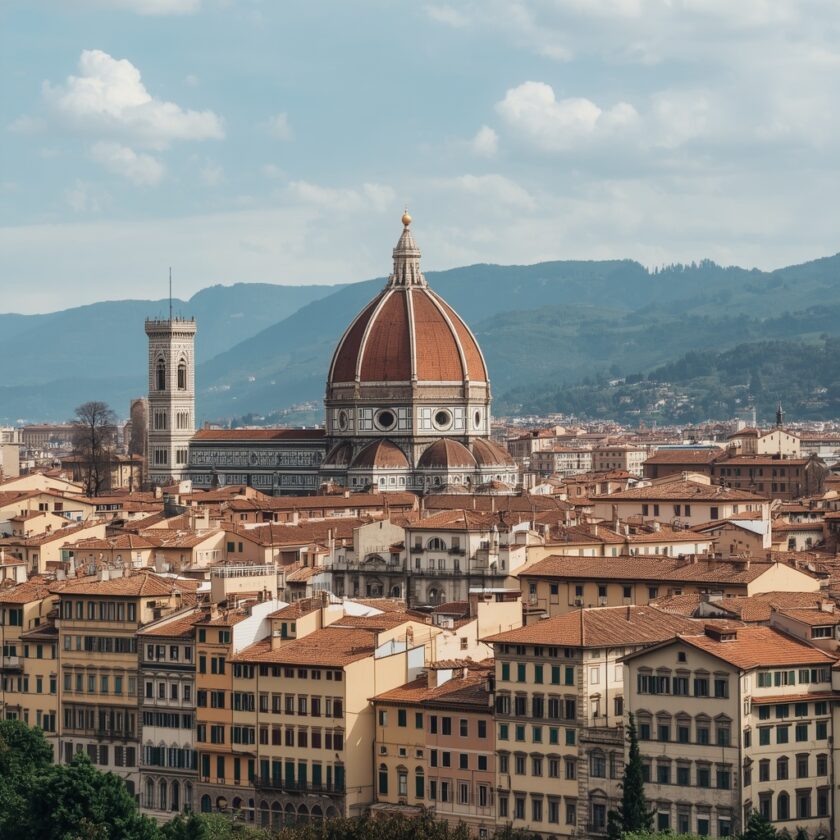
Florence is the city that gave the world the Renaissance — and visiting it feels like walking through the greatest art history lesson ever assembled in one place. Within a single square kilometre of the historic centre, you’ll find Botticelli’s Birth of Venus, Michelangelo’s David, Brunelleschi’s cathedral dome (still the largest masonry dome ever constructed), and Leonardo da Vinci’s earliest surviving paintings. No other city on Earth concentrates this density of masterworks in this small a space.
But Florence in 2026 is far more than its museums. The food scene — bistecca fiorentina, lampredotto street sandwiches, the world’s finest Chianti Classico — is one of Italy’s very best. The neighbourhoods beyond the tourist circuit are genuinely beautiful, authentically lived-in, and reward explorers with a city that most visitors never see. This guide covers everything.
🇮🇹 Florence at a Glance
- 📍 Location: Tuscany, central Italy — regional capital
- ✈️ Airport: Florence Airport (FLR) — small, limited flights · Pisa (PSA) — 1 hr by train, more connections
- 🚂 Train: Florence Santa Maria Novella — central, excellent connections
- 🌡️ Best months: April–May, September–October
- 💶 Currency: Euro (€)
- ⏱️ Recommended stay: 3–5 days minimum
- 🎨 Known for: Renaissance art, Duomo, Uffizi, David, Chianti wine, leather
- 🏨 Book accommodation: Search Florence hotels on Booking.com →
When to Visit Florence
Getting to Florence
✈️ By Flight
Florence’s own airport (FLR — Peretola) is small with limited international connections — mainly Italian domestic and a handful of European routes. Most visitors fly into Pisa Airport (PSA) — well-served by Ryanair, easyJet, and others — and take the direct train to Florence Santa Maria Novella station (70 minutes, €9). Alternatively, fly into Rome FCO or Milan MXP/LIN and take the high-speed train.
🚂 By High-Speed Train
Florence is one of Italy’s best-connected train cities. Rome to Florence: 1.5 hours by Frecciarossa (from €19 booked ahead). Milan to Florence: 1.75 hours (from €22). Venice to Florence: 2 hours (from €19). If you’re doing a multi-city Italy itinerary, Florence is the natural centrepiece — equidistant from Rome, Milan, and Venice by rail.
Getting Around Florence
🚶 Walking — The Only Way
Florence’s historic centre is almost entirely pedestrianised and compact enough that every major sight is within a 20-minute walk from every other. The Uffizi, Duomo, Accademia (David), Ponte Vecchio, Palazzo Pitti, and Piazzale Michelangelo are all walkable from a central hotel. Florence rewards slow walking — every street reveals a Renaissance palace, a medieval tower, or a courtyard that most visitors walk past without noticing.
🚌 Bus & Tram
The ATAF bus network and T1 tram line (connecting the train station to the western suburbs) handle areas outside the walking centre. Single ticket: €1.70 (bought in advance from tabacchi shops — significantly cheaper than on-board). A 24-hour pass costs €5. Taxis are abundant and relatively affordable within the compact city centre.
Florence’s Neighbourhoods
Top Things to Do in Florence
Unmissable
🎨 Uffizi Gallery
The greatest collection of Italian Renaissance painting in the world — and one of the most significant art museums on Earth. Botticelli’s Birth of Venus and La Primavera, Leonardo’s Annunciation, Michelangelo’s Doni Tondo, Caravaggio’s Medusa, Raphael, Titian, and Giotto — room after room of works that defined Western art for 500 years. Allow a minimum of 3 hours; art lovers need a full day.
- Book timed entry at least 3–4 weeks ahead in peak season — sells out completely
- Opening hours: Tue–Sun 08:15–18:50 (closed Mondays)
- Allow 3 hours minimum · audio guide strongly recommended
- The queue without a pre-booked ticket can exceed 2 hours in summer
Essential
🏛️ Accademia Gallery — Michelangelo’s David
No photograph prepares you for David. At 5.17 metres tall and carved from a single block of Carrara marble between 1501 and 1504, Michelangelo’s statue is a physical experience as much as an artistic one — the scale, the detail of the veins in the hands, the tension in the pose, the expression of focused intensity. The Accademia also houses four of Michelangelo’s unfinished Prisoners statues, which are in some ways more emotionally powerful than the finished work.
- Book timed entry in advance — walk-up queues are very long in peak season
- Hours: Tue–Sun 08:15–18:50 (closed Mondays)
- Allow 1.5 hours — the museum is focused and compact
Architecture
⛪ Florence Cathedral (Duomo) & Brunelleschi’s Dome
The Florence Cathedral is free to enter — but the extraordinary experience is climbing the dome. Filippo Brunelleschi’s dome, completed in 1436, was the largest built since the Roman Pantheon and remains an engineering marvel: constructed without scaffolding using an ingenious double-shell design that Brunelleschi invented specifically for this project. The climb (463 steps) rewards with panoramic views over Florence and a close-up look at Vasari’s Last Judgment frescoes on the interior of the dome.
- Cathedral entry is free — pass required for dome and other monuments
- Dome timed entry books out quickly — reserve well in advance
- Bell Tower (Giotto’s Campanile): 414 steps, slightly shorter queue than dome
- Best dome visit: early morning for the clearest views and shortest queues
Views
🌅 Piazzale Michelangelo & San Miniato al Monte
The best view of Florence — and it’s completely free. A broad piazza on a hill south of the Arno looks directly across to the Duomo, the Palazzo Vecchio tower, and the whole historic centre laid out in the golden Tuscan light. Every guidebook mentions it for good reason: the view is genuinely extraordinary, particularly at sunset when the light turns the terracotta rooftops amber and the Arno reflects the sky. Behind the piazza, the Romanesque church of San Miniato al Monte (11th century) is one of the most beautiful buildings in Florence and almost entirely missed by visitors who stop at the piazza and leave.
Gardens
🌿 Boboli Gardens & Palazzo Pitti
The Medici family’s former palace and its extraordinary garden — one of the largest and most significant Renaissance gardens in Europe — sit in the Oltrarno neighbourhood directly behind the Ponte Vecchio. The palace houses seven separate museums including the Palatine Gallery (with Raphael and Titian paintings the Uffizi doesn’t have). The Boboli Gardens provide a green, peaceful escape from the city’s cobblestone intensity — with grottos, fountains, cypress allées, and a view over the surrounding Tuscan hills.
Food
🥩 Florence Food Tour — The Essential Introduction
Florentine cuisine is one of Italy’s most distinctive regional traditions — built around bistecca fiorentina (the T-bone steak grilled over wood), lampredotto (the fourth stomach of the cow, served in a bread roll — the true Florentine street food), ribollita (bread and vegetable soup), pappa al pomodoro, and schiacciata (the local flatbread). A guided food tour through the Mercato Centrale, the Sant’Ambrogio market, and the street food corners of the centre introduces all of these in 3 hours and costs less than one restaurant dinner.
Day Trips from Florence
Most Beautiful
🍷 Chianti Wine Country (30–60 min)
The rolling hills between Florence and Siena are the Chianti Classico wine region — one of Italy’s most beautiful landscapes and home to some of the world’s finest Sangiovese wines. A guided Chianti wine tour visits 2–3 family estates for cellar tours and tastings, drives through the cypress-lined road scenery that appears in every Tuscany postcard, and typically includes lunch at a vineyard. One of the finest half-day experiences available from any Italian city.
Medieval City
🏰 Siena (1.5 hrs)
The finest medieval city in Tuscany — a remarkably intact hilltop city whose shell-shaped central piazza (Il Campo) is one of the most beautiful public spaces in Europe. The Sienese Gothic Duomo is extraordinary inside (the floor alone — 56 marble panels depicting biblical scenes — is worth the trip). Siena and Florence were bitter rivals for centuries; visiting both reveals the two very different personalities of Tuscan urban culture.
Renaissance Town
🗼 Pisa & the Leaning Tower (1 hr)
Yes, the tower really does lean — and seeing it for the first time, in its extraordinary setting alongside the Piazza dei Miracoli (Cathedral, Baptistery, Cemetery, and Tower all together on a pristine green lawn), is genuinely impressive. Don’t expect more than 2–3 hours here — Pisa is a day-trip, not a destination. Combine with the Cinque Terre or Lucca for a full day out of Florence.
Where to Stay in Florence
Best Neighbourhood
Oltrarno — Best for Authentic Florence & Local Life
The south bank of the Arno — artisan workshops, the best trattorias in Florence, Palazzo Pitti, and a genuinely local atmosphere away from the tourist crush. 10-minute walk to the Uffizi via Ponte Vecchio. Quieter, more beautiful, and 15–20% cheaper than equivalent centro storico hotels.
From €85/night · Boutique hotels from €160+
Best Location
Centro Storico — Best for Sightseeing Access
Walking distance to the Duomo, Uffizi, and David. The most convenient location for first-time visitors who want everything within minutes. Noisier, more expensive, and more touristy than Oltrarno — but unbeatable for access.
From €110/night · Boutique hotels from €200+
Best Value
Santa Croce — Best Value Near the Centre
East of the Uffizi — 10-minute walk to all major sights, more residential than the Duomo area, excellent local bars and restaurants around the piazza. 20–30% cheaper than equivalent Duomo-area hotels.
From €70/night · Good mid-range from €120+
Where to Eat in Florence
| Restaurant / Place | Area | Vibe | Must Order |
|---|---|---|---|
| Trattoria Sostanza | Santa Maria Novella | Old Florence institution since 1869 | Butter pasta, bistecca fiorentina |
| All’Antico Vinaio | Centro Storico | Legendary sandwich shop, queue outside | Schiacciata sandwich with finocchiona + truffle |
| Il Latini | Santa Maria Novella | Shared tables, communal Tuscan feast | Ribollita, bistecca, Chianti from the barrel |
| Buca Mario | Centro Storico | Oldest restaurant in Florence (1886) | Pappa al pomodoro, florentine steak |
| Trattoria da Ruggero | Oltrarno | Local regulars, no-frills, excellent | Lampredotto, ribollita, house Chianti |
| Gelateria dei Neri | Santa Croce | Best gelato in Florence | Pistachio, nocciola, ricotta-fig |
| Enoteca Pinchiorri | Santa Croce | Three Michelin stars, special occasion | Tasting menu with Tuscan wine pairing |
| Mercato Centrale | San Lorenzo | Indoor food hall, lunch institution | Lampredotto stand, fresh pasta, Florentine focaccia |
Suggested 4-Day Florence Itinerary
Day 1 — Uffizi & Centro Storico
Uffizi Gallery at opening (08:15, pre-booked). Morning among the Botticellis and Leonardos. Lunch at All’Antico Vinaio (queue is worth it). Afternoon: Piazza della Signoria, Palazzo Vecchio exterior, Ponte Vecchio. Sunset from Ponte Santa Trinità. Dinner in Oltrarno.
Day 2 — David & Duomo
Accademia Gallery (09:00, pre-booked) — David before the crowds fill the room. Duomo exterior and Baptistery. Dome climb (pre-booked timed slot) for panoramic views. Afternoon: San Marco Museum or Bargello. Evening aperitivo in Santo Spirito piazza.
Day 3 — Chianti Wine Day Trip
Guided Chianti wine tour — two vineyard visits, cellar tour, lunch at an estate, afternoon tasting. Return to Florence for early evening dinner at Trattoria Sostanza.
Day 4 — Oltrarno & Piazzale Michelangelo
Morning: Palazzo Pitti and Boboli Gardens. Lunch at Trattoria da Ruggero. Afternoon: Oltrarno artisan workshops and leather stores. Sunset walk up to Piazzale Michelangelo and San Miniato al Monte church. Farewell dinner in Santa Croce neighbourhood.
Book Your Florence Trip
✈️ Flights to Florence / Pisa (FLR / PSA)
Compare prices to both Florence and Pisa airports — plus Rome and Milan for onward rail connections.
🏨 Hotels in Florence
400+ properties across all neighbourhoods and budgets — from €55/night guesthouses in Santa Croce to €500+/night palazzo hotels on the Arno.
🎟️ Skip-the-Line Tickets & Tours
Uffizi, Accademia (David), Duomo dome climb, food tours, Chianti wine tours, and Siena day trips — all with free cancellation on most options.
🚂 Train Tickets to/from Florence
High-speed trains to Rome (1.5 hrs), Venice (2 hrs), Milan (1.75 hrs), and Naples (3 hrs). Book in advance for best fares.
🚗 Car Rental in Florence
Essential for Chianti, Siena, and the Tuscan countryside. Note: driving in Florence’s ZTL (restricted traffic zone) without a permit results in a fine — pick up your rental car outside the ZTL boundary.
FAQ — Florence Travel 2026
How many days do you need in Florence?
Three days covers the Uffizi, Accademia (David), Duomo complex, and the main neighbourhoods at a reasonable pace. Four to five days adds a Chianti wine trip, Siena day trip, and time to wander without an agenda. Florence is genuinely rewarding for longer stays — the city reveals itself slowly to those who don’t rush.
Do I absolutely need to book the Uffizi and Accademia in advance?
Yes — for both, especially from April to October. The Uffizi queue without a pre-booked ticket routinely exceeds 2 hours in peak season. The Accademia queue for David can be 90 minutes. Book at least 2–3 weeks ahead in summer; 1 week ahead in shoulder season. Both sell out.
What is the ZTL and how do I avoid it?
The ZTL (Zona a Traffico Limitato) is Florence’s restricted traffic zone covering the historic centre — cameras photograph every entering vehicle and fines (€80–160) are mailed to rental car companies who pass them to renters. If you rent a car, always pick it up and drop it off outside the ZTL. Your hotel can advise on the nearest parking garage. Do not drive in the historic centre.
Is Florence expensive?
Mid-range — similar to Rome. A trattoria dinner with wine costs €25–45/person. A good central hotel runs €90–180/night. Museums add up (Uffizi + Accademia + Duomo complex = about €70/person) — budget accordingly. The street food (lampredotto, schiacciata sandwiches, gelato) is excellent and very affordable at €3–6 per item.
Should I combine Florence with Rome or Venice?
Both combinations work well. Florence–Rome is the classic pairing — 1.5 hours apart by high-speed train, complementary in character (Renaissance art vs ancient history). Florence–Venice is equally excellent — 2 hours by train, and the two cities couldn’t be more different in atmosphere. A 10-day Italy trip might cover Rome (3 nights) → Florence (4 nights) → Venice (3 nights), or the reverse, using the Frecciarossa as the backbone.